Can Dogs Eat Sweet Potatoes? A Safe, Practical Guide for Dog Owners

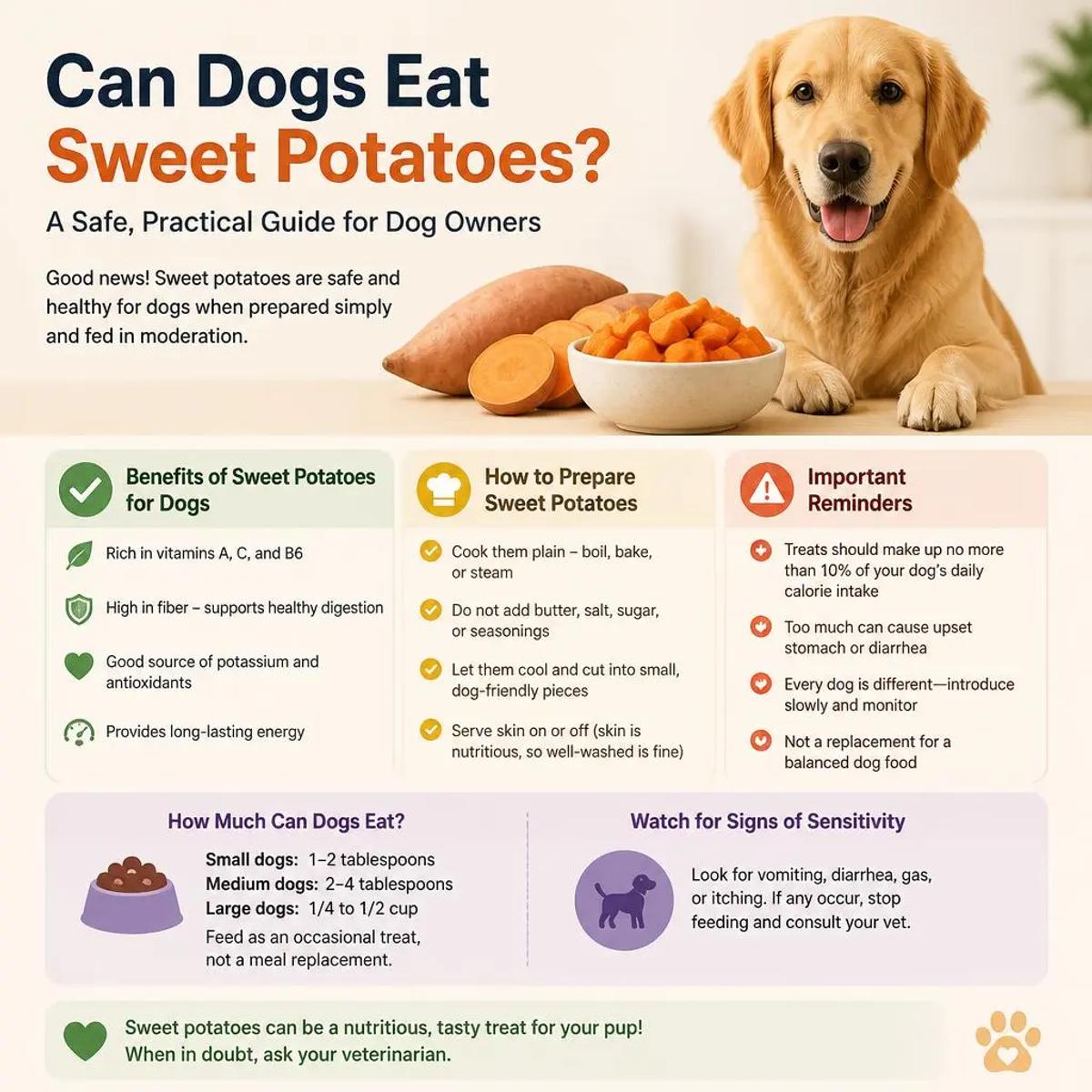
Table Of Contents
Yes, dogs can eat sweet potatoes. The safe version is simple: cook them, keep them plain, and serve them in small amounts.
That is the short answer most dog owners actually need. Sweet potatoes show up in commercial dog foods, training treats, and homemade recipes because they are easy to digest when prepared correctly and they bring useful nutrients to the table. But "healthy" does not mean "unlimited," and it definitely does not mean "raw, seasoned, or dessert-style."
I cross-checked the basic guidance against veterinary consumer resources such as The Spruce Pets and the nutrient profile in USDA FoodData Central. The conclusion is consistent: sweet potatoes are fine for most dogs when they are treated like a treat, not a meal.
If you want more practical dog health and behavior reading, our dog park safety guide and puppy socialization classes guide are useful next stops. If you are looking for a place to get your dog moving year-round, browse our indoor dog park directory.
The quick answer
If your dog ate a small bite of plain cooked sweet potato, that is usually not a problem.
If your dog is eating a large serving, a sweet potato casserole, fries, chips, or anything loaded with butter, salt, sugar, garlic, onion, or marshmallows, that is a different story. The ingredient that makes sweet potatoes appealing to people is often the part that makes them less suitable for dogs: extra fat, extra sugar, and extra seasoning.
Think of sweet potato as a training helper or occasional topper, not a daily staple and not a substitute for balanced dog food.
What makes it dog-friendly?
- It is soft when cooked, so most dogs can chew it easily.
- It contains fiber, which can be useful in small amounts.
- It has beta-carotene, which is part of why orange-fleshed sweet potatoes are so nutrient-dense.
- It is easy to portion into bite-sized pieces for training.
What makes it risky?
- Raw chunks can be hard to chew and can become a choking or digestive issue.
- Seasonings and rich toppings can upset a dog's stomach.
- Too much starchy food can crowd out the nutrition your dog's regular diet is supposed to provide.
Why sweet potatoes can be a good treat
Sweet potatoes are popular in dog-friendly recipes for a reason. They offer a mix of fiber and plant nutrients that fit well into an occasional treat plan.
The biggest benefit is simple: they are easy to keep plain. A baked sweet potato does not need much to be useful. You do not need sauce, butter, or a long ingredient list. That matters because dogs do better with food that is straightforward and predictable.
From a nutrition standpoint, sweet potatoes are mostly a carbohydrate source, but they also bring:
- Fiber, which may help with stool quality in some dogs when fed in small amounts.
- Beta-carotene, the pigment that gives orange sweet potatoes their color.
- Potassium and other micronutrients, which are part of why sweet potatoes are considered a nutrient-dense food.
That said, dogs do not need sweet potatoes to be healthy. They need a complete diet that is appropriate for their age, size, and medical history. Sweet potato is a bonus, not a requirement.
Sweet potato in a dog's diet: what matters most
| Form | Safe? | Why it matters |
|---|---|---|
| Plain cooked sweet potato | Yes | Soft, easy to portion, and the easiest version for most dogs to handle. |
| Raw sweet potato | Use caution | Harder to chew, harder to digest, and more likely to cause stomach upset or a choking issue. |
| Butter, salt, sugar, spices | No | Rich toppings can trigger vomiting, diarrhea, or extra calorie load. |
| Fries, chips, casserole, marshmallows | No | These are human-food versions, not dog-food versions. They are too oily, salty, or sugary. |
How to serve sweet potatoes safely
The safest way to feed sweet potatoes is boring, and that is a good thing.
1. Cook them fully
Bake, boil, steam, or roast the sweet potato until it is soft all the way through. The goal is a texture your dog can chew without effort.
If you are making them for training, let them cool first and cut them into very small cubes. Smaller pieces are easier to digest and easier to reward with.
2. Keep them plain
No salt. No butter. No brown sugar. No cinnamon sugar coating. No marshmallows.
If a recipe is designed to taste like dessert for people, it is probably not the right recipe for a dog.
3. Start with a tiny amount
Even safe foods can cause a loose stool if you introduce them too quickly. The first serving should be small enough that you can see how your dog reacts.
4. Watch the body language and the poop
This is the part owners skip, but it is the most useful. If the treat goes well, your dog stays comfortable and their stool stays normal. If it does not go well, you will usually notice nausea, gas, softer stool, or reduced appetite within a day.
5. Use sweet potato as a topper, not the whole plan
Sweet potato is best when it is one small part of a balanced diet. It should support your dog's routine, not replace it.
Practical safety score
Editorial safety score based on chewability, seasoning, and digestion, not a medical test.
How much is too much?
This is the part where good intentions can go sideways.
Sweet potato is often treated as a "healthy extra," which can make it easy to overfeed. But dogs do not need large servings to enjoy the flavor or benefit from the texture.
The rule I use is simple: if the sweet potato starts to look like part of the meal, it is probably too much.
That matters because calories add up fast, especially with:
- small dogs that do not have much room in their daily calorie budget
- dogs that are already overweight
- dogs that are not very active
- dogs on prescription diets
If you use treats for training, make sure the extra calories are still small relative to the rest of the day. That is the same practical advice you will find in many vet-oriented treat guides: treats should stay limited, and the base diet should remain the main source of nutrition.
🌧️ Extreme Weather Dog Safety & Indoor Play Guide
Don't let scorching summer pavement or freezing winter storms compromise your dog's physical health and mental happiness. Get our comprehensive survival guide delivered instantly.
A good way to think about portions
| Dog type | Best approach | Portion mindset |
|---|---|---|
| Toy and small dogs | Tiny cubes or mash | A few bites, not a bowl |
| Medium dogs | Small cubes or a light topper | Think sample size, not side dish |
| Large dogs | A small handful at most | Still a treat, still limited |
You do not need a perfect gram measurement to make a good decision here. The practical question is whether sweet potato is taking the place of balanced food. If yes, reduce it.
When sweet potatoes are a bad idea
Sweet potatoes are not the right choice for every dog. This is where a lot of generic advice gets too optimistic.
Skip or limit sweet potato if your dog:
- has a sensitive stomach and reacts to new foods easily
- is overweight and needs a tighter calorie plan
- has diabetes or blood sugar concerns
- is on a prescription diet
- has a history of pancreatitis
- has a medical condition where your vet already told you to limit treats
If your dog has any of those issues, the safest move is to ask your veterinarian before adding sweet potato to the menu. That is especially true if the treat is going to be given often rather than occasionally.
What if your dog ate raw sweet potato?
One small raw bite is often more of a digestion problem than a toxic emergency, but larger pieces can still be a problem.
Call your vet if you notice:
- repeated vomiting
- belly pain
- gagging or choking
- no appetite
- diarrhea that does not settle
- constipation or straining
If your dog swallowed a big hard chunk and is now acting uncomfortable, do not assume it will "just pass." Get professional advice.
Sweet potato myths that deserve to be retired
Myth 1: Raw sweet potato is the healthiest version
Not for dogs. Raw sweet potato is not the same as "better." It is harder to chew and usually harder to digest.
Myth 2: Sweet potato skin is always unsafe
Not always. But it is tougher and more fibrous, so many dogs do better when the potato is peeled or at least very well cooked.
Myth 3: If it is in dog food, unlimited homemade sweet potato must be fine
Commercial formulas are balanced. Homemade sweet potato chunks are not. The context matters.
Myth 4: Any dog can eat the same amount
Small dogs, senior dogs, overweight dogs, and dogs with medical conditions need tighter control than healthy, active dogs.
A simple kitchen method that works
If I were prepping sweet potato for a dog at home, I would do this:
- Wash the sweet potato well.
- Bake, steam, or boil it until soft.
- Let it cool completely.
- Cut it into tiny cubes or mash it lightly.
- Serve a small amount with the regular meal or as training rewards.
- Watch the stool the next day before serving it again.
That is it. No fancy recipe needed.
If you want a dog-friendly routine that includes training, socialization, and treats, our puppy socialization classes guide explains how to use food rewards without turning every session into a calorie bomb. For broader behavior and play guidance, our dog park safety guide is a good companion read.
Frequently asked questions
Can puppies eat sweet potatoes?
Yes, but keep the portion tiny and the preparation plain. Puppies have sensitive digestive systems and are still building stable eating habits, so new foods should be introduced carefully.
Can dogs eat sweet potato skin?
Sometimes, but I would not make skin the default. It can be a little tougher to digest. If your dog has a sensitive stomach, peel it first.
Can dogs eat sweet potatoes every day?
Usually not as a regular habit. Daily sweet potato can crowd out better nutrition if the portion is too large. Occasional use is the safer approach.
Can dogs eat mashed sweet potatoes?
Yes, if the mash is plain and not loaded with butter, milk, sugar, or seasoning. Think simple mash, not holiday side dish.
Can dogs eat sweet potato fries or chips?
No. Those are people foods with extra oil, salt, and often extra seasonings. They are the wrong texture and the wrong ingredient profile for dogs.
Is sweet potato better than white potato for dogs?
In practice, sweet potato is usually the easier choice because dog owners are more likely to serve it plain and cooked. White potatoes bring their own concerns, especially when raw or heavily processed.
The bottom line
Dogs can eat sweet potatoes, and for many dogs they are a perfectly fine occasional treat.
The safe formula is still the same: plain, cooked, and small.
If you remember only three things, remember these:
- Cook it fully.
- Keep it unseasoned.
- Treat it like a small extra, not a meal.
That approach protects the dog's stomach, keeps calories in check, and makes the whole thing easy for the owner. It is also the same kind of practical, low-drama decision-making that keeps dogs happier in the long run, whether they are at home, in training, or enjoying one of the climate-controlled play spaces in our directory.
If you want more practical dog-owner reading, browse the Indoor Dog Park blog or reach out through our contact page.