
Heat-proof indoor runs
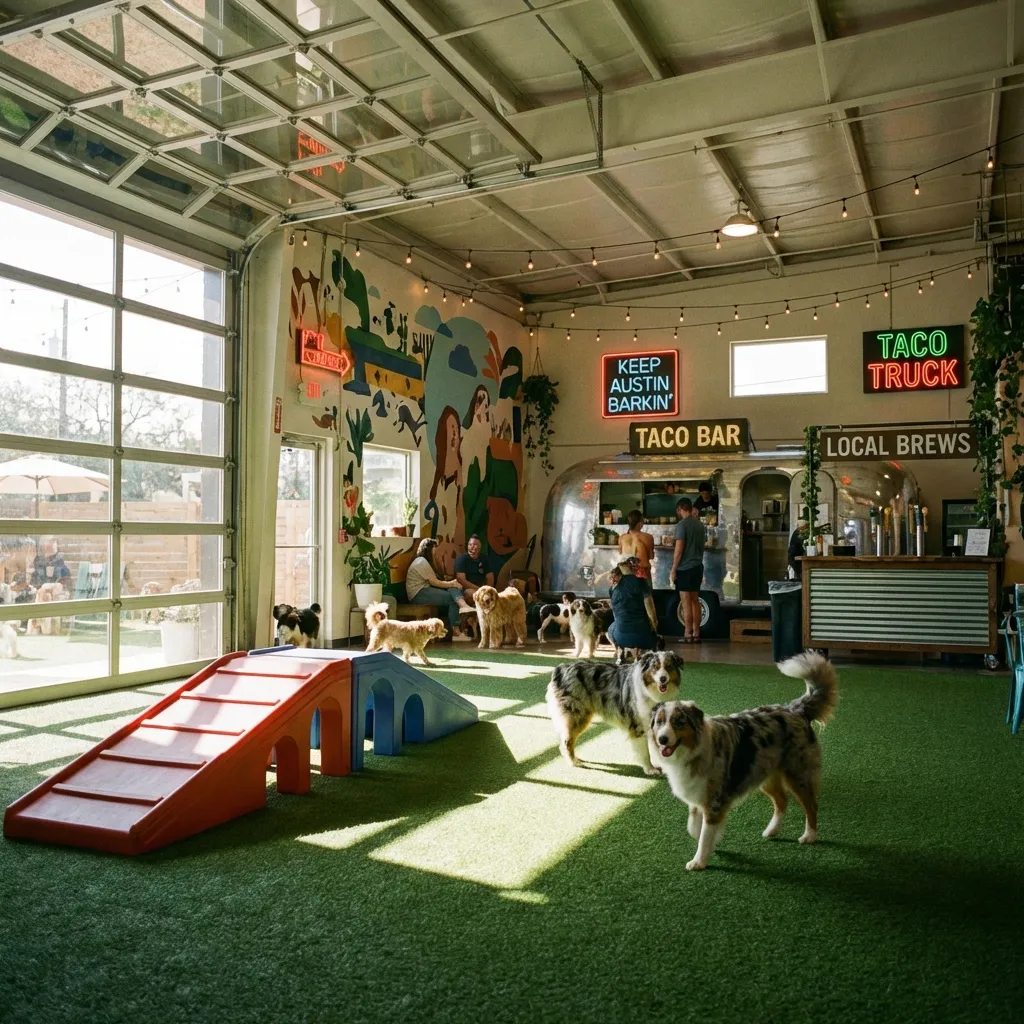
Indoor dog park in Austin
Tech hub culture meets extreme summer heat—Austin indoor dog parks combine AC, coworking spaces, and heat alerts so your pup stays active even when temps hit 100°F+.
Austin’s vibrant dog culture uniquely matches the city’s tech-forward, social, and outdoorsy lifestyle while addressing the challenge of brutal Texas summers. With temperatures regularly exceeding 100°F from June through September, indoor facilities have become essential sanctuaries. Neighborhoods like the Domain and East Austin host innovative concepts that blend high-end AC with coworking hubs, coffee bars, and local breweries. These "brew-and-play" venues align with Austin’s remote-work culture, providing high-speed Wi-Fi and quiet zones alongside premium K9 turf and monitored play pods. Data from Austin Parks and Recreation highlights numerous outdoor options, but the private indoor sector thrives by offering a specialized, temperature-controlled experience that is practically a requirement for safe year-round play.
The operational focus of Austin’s indoor parks is rooted in transparency and community health. Top-tier facilities require a multi-step onboarding process, including a temperament evaluation and digital verification of Rabies, Distemper, and Bordetella vaccinations. Membership models are popular, with average monthly rates ranging from $120 to $180, often including perks like craft beverage credits, priority entry during heat alerts, and guest passes for housemates. For the casual visitor, $18 to $25 weekday drop-ins are common. Safety is enhanced through professional "pack leaders" and advanced hydration stations that provide filtered, chilled water. Owners can find more specific advice on managing their dogs during peak heat in our planning essentials guide. By integrating Austin hospitality with pet safety, these indoor parks have become indispensable anchors for the city’s pet parents.
Premium parks in Austin
Partners highlighted here are currently investing in featured placement across this guide.
Pinned above free listings
Premium partners appear before every other card within the city directory.
Lead-friendly CTAs
Direct website + phone buttons encourage bookings straight from this page.
Always-on exposure
Featured cards show even when we haven’t processed new static data yet.
Indoor Dog Parks in Austin, TX: Top Spots for Your Pup
Discover top-rated climate-controlled indoor dog parks, canine agility clubs, and dog bars across Austin to beat the Texas summer heat and flash storms.
See everything laid out on the map
Use the live map to lock in nearby options, preview ratings, and save time hopping between neighborhoods.
All dog parks in Austin
Filter-ready cards with ratings, amenities, and quick actions. Use the chips to jump between sections.
What Austin is known for:
Average Pricing in Austin
* Prices vary by facility. Please check individual park listings for exact pricing and vaccination requirements.
Dog Parks in Austin
50 locations · 4.7 average rating
All Dogs Unleashed
All Dogs Unleashed is a beloved Dog facility in Austin that consistently earns praise from pet owners. This facility stands out for being dogs love it here and clean and well-maintained and great for socialization. Dog owners appreciate the attention to detail and the genuine care shown to every furry visitor. For more information, call (512) 963-6017.
As the Fur Flies
As the Fur Flies is a beloved Dog facility in Austin that consistently earns praise from pet owners. This facility stands out for being dogs love it here and clean and well-maintained. Dog owners appreciate the attention to detail and the genuine care shown to every furry visitor. For more information, call (512) 502-5112.
Auditorium Shores Dog Park
Pet parents in TX 78704 rave about Auditorium Shores Dog Park. What makes this Dog facility special is its spacious play areas, convenient location, peace of mind for owners. The staff's dedication to creating a positive experience for both dogs and their owners is evident in every visit.
Austin Canine Central
Austin Canine Central stands out in Austin for its exceptional service. The facility is known for clean and well-maintained and great for socialization and peace of mind for owners, creating an environment where dogs thrive and owners feel confident. For more information, call (512) 458-8800.
Austin Pet Ranch
Austin Pet Ranch has become a favorite among Austin residents. The facility excels in peace of mind for owners and safe environment, making it a trusted choice for dog owners who want the best for their pets. For more information, call (512) 301-2279.
Austin Pet Stylist
Austin Pet Stylist is a beloved Dog facility in Austin that consistently earns praise from pet owners. This facility stands out for being safe environment and excellent customer service. Dog owners appreciate the attention to detail and the genuine care shown to every furry visitor. For more information, call (512) 200-4229.
Austin Pup Culture
Austin Pup Culture is a beloved Dog facility in Austin that consistently earns praise from pet owners. This facility stands out for being friendly and caring staff and great for socialization. Dog owners appreciate the attention to detail and the genuine care shown to every furry visitor. For more information, call (512) 524-0057.
Austins Pet Escape (Local Favorite)
Austins Pet Escape (Local Favorite) has earned its reputation as a top Dog facility in Austin. Customers consistently mention the spacious play areas and professional and reliable, highlighting why this facility is a go-to destination for dog lovers. For more information, call (413) 234-0028.
Dog Trainings in Austin
12 locations · 4.9 average rating
All Dogs Unleashed Dog Training
All Dogs Unleashed Dog Training is a beloved Dog facility in Austin that consistently earns praise from pet owners. This facility stands out for being safe environment. Dog owners appreciate the attention to detail and the genuine care shown to every furry visitor. For more information, call (512) 660-1120.
Dog Training Elite Austin
Pet parents in Austin rave about Dog Training Elite Austin. What makes this Dog facility special is its convenient location, spacious play areas. The staff's dedication to creating a positive experience for both dogs and their owners is evident in every visit. For more information, call (512) 762-5080.
East Lamar Boarding & Training Scool
Pet parents in Austin rave about East Lamar Boarding & Training Scool. What makes this Dog facility special is its friendly and caring staff, professional and reliable. The staff's dedication to creating a positive experience for both dogs and their owners is evident in every visit. For more information, call (512) 658-4952.
Every Dog Behavior and Training
Every Dog Behavior and Training has earned its reputation as a top Dog facility in Suite D. Customers consistently mention the dogs love it here and peace of mind for owners, highlighting why this facility is a go-to destination for dog lovers. For more information, call (512) 675-0444.
K9 Kenny
K9 Kenny stands out in Austin for its exceptional service. The facility is known for dogs love it here and great for socialization and friendly and caring staff, creating an environment where dogs thrive and owners feel confident. For more information, call (512) 710-7636.
K9 Workingmind, Training by Tara LLC
K9 Workingmind, Training by Tara LLC stands out in Austin for its exceptional service. The facility is known for spacious play areas and friendly and caring staff, creating an environment where dogs thrive and owners feel confident. For more information, call (512) 402-4229.
Lucky Star Dog Training
Pet parents in Austin rave about Lucky Star Dog Training. What makes this Dog facility special is its excellent customer service, convenient location, great for socialization. The staff's dedication to creating a positive experience for both dogs and their owners is evident in every visit. For more information, call (713) 419-8686.
Sit Means Sit Dog Training - Austin
Sit Means Sit Dog Training - Austin stands out in Austin for its exceptional service. The facility is known for clean and well-maintained and peace of mind for owners, creating an environment where dogs thrive and owners feel confident. For more information, call (512) 348-7833.
Dog Daycares in Austin
11 locations · 4.8 average rating
Austin Dogtown Boarding & Daycare
Austin Dogtown Boarding & Daycare has become a favorite among Austin residents. The facility excels in professional and reliable and safe environment, making it a trusted choice for dog owners who want the best for their pets. For more information, call (512) 535-4244.
Barkingham Place - Dog Daycare and Boarding
Barkingham Place - Dog Daycare and Boarding has earned its reputation as a top Dog facility in Austin. Customers consistently mention the spacious play areas and great for socialization, highlighting why this facility is a go-to destination for dog lovers. For more information, call (737) 373-4736.
Camp Bow Wow Austin
Pet parents in Austin rave about Camp Bow Wow Austin. What makes this Dog facility special is its convenient location, spacious play areas, peace of mind for owners. The staff's dedication to creating a positive experience for both dogs and their owners is evident in every visit. For more information, call (737) 258-9027.
D Pet Hotels Austin
D Pet Hotels Austin is a beloved Dog facility in Austin that consistently earns praise from pet owners. This facility stands out for being friendly and caring staff and spacious play areas. Dog owners appreciate the attention to detail and the genuine care shown to every furry visitor. For more information, call (737) 339-8578.
Happy Cat Hotel & Spa Austin North
Happy Cat Hotel & Spa Austin North is a beloved Dog facility in Austin that consistently earns praise from pet owners. This facility stands out for being dogs love it here and professional and reliable. Dog owners appreciate the attention to detail and the genuine care shown to every furry visitor. For more information, call (512) 400-0603.
My Love Fur Paws Pet Resort
Pet parents in Austin rave about My Love Fur Paws Pet Resort. What makes this Dog facility special is its dogs love it here, great for socialization. The staff's dedication to creating a positive experience for both dogs and their owners is evident in every visit. For more information, call (512) 814-0193.
Riley's Ranch Pet Resort
Riley's Ranch Pet Resort stands out in Austin for its exceptional service. The facility is known for spacious play areas and peace of mind for owners, creating an environment where dogs thrive and owners feel confident. For more information, call (512) 559-6257.
Second Home Boarding, LLC
Second Home Boarding, LLC stands out in Austin for its exceptional service. The facility is known for convenient location and clean and well-maintained, creating an environment where dogs thrive and owners feel confident. For more information, call (512) 382-7206.
Dog Groomings in Austin
9 locations · 4.8 average rating
Bravado Dog Grooming
Bravado Dog Grooming is a beloved Dog facility in Austin that consistently earns praise from pet owners. This facility stands out for being great for socialization and peace of mind for owners. Dog owners appreciate the attention to detail and the genuine care shown to every furry visitor. For more information, call (512) 769-8898.
Dog grooming - Doggy love
Dog grooming - Doggy love stands out in Austin for its exceptional service. The facility is known for excellent customer service and great for socialization, creating an environment where dogs thrive and owners feel confident. For more information, call (512) 569-6011.
Fluff ‘n’ Buff Dog Grooming
Fluff ‘n’ Buff Dog Grooming has earned its reputation as a top Dog facility in Austin. Customers consistently mention the convenient location and safe environment and dogs love it here, highlighting why this facility is a go-to destination for dog lovers. For more information, call (512) 730-0571.
Groomingdale's of Austin
Groomingdale's of Austin has become a favorite among Austin residents. The facility excels in safe environment and friendly and caring staff, making it a trusted choice for dog owners who want the best for their pets. For more information, call (512) 524-1484.
Lucky Dog Grooming
Lucky Dog Grooming stands out in Austin for its exceptional service. The facility is known for peace of mind for owners and spacious play areas, creating an environment where dogs thrive and owners feel confident. For more information, call (512) 331-7222.
Reese's Luxury Mobile Grooming
Pet parents in Austin rave about Reese's Luxury Mobile Grooming. What makes this Dog facility special is its peace of mind for owners, excellent customer service, safe environment. The staff's dedication to creating a positive experience for both dogs and their owners is evident in every visit. For more information, call (512) 529-8203.
West End Grooming
West End Grooming is a beloved Dog facility in Austin that consistently earns praise from pet owners. This facility stands out for being great for socialization and professional and reliable. Dog owners appreciate the attention to detail and the genuine care shown to every furry visitor. For more information, call (512) 451-5005.
Woof Gang Bakery & Grooming Austin
Woof Gang Bakery & Grooming Austin stands out in Austin for its exceptional service. The facility is known for excellent customer service and friendly and caring staff and spacious play areas, creating an environment where dogs thrive and owners feel confident. For more information, call (512) 391-9663.
Dog Bars in Austin
2 locations · 4.4 average rating
Dog Barton Springs
Dog Barton Springs has earned its reputation as a top Dog facility in Austin. Customers consistently mention the dogs love it here and spacious play areas and convenient location, highlighting why this facility is a go-to destination for dog lovers.
Domain Central Bark
Domain Central Bark stands out in Austin for its exceptional service. The facility is known for safe environment and great for socialization, creating an environment where dogs thrive and owners feel confident.
Cities near Austin
Worth the drive? Check out top-rated indoor parks in neighboring cities.
Where can I walk my dog indoors in Austin?
Not yet in our verified directory for Austin. If you know a great indoor option, you can submit it and we’ll review it for inclusion.
How much do indoor dog parks cost in Austin?
Expect $18–$25 weekday drop-ins, $25–$35 weekend sessions, and $120–$180 monthly memberships. Many Austin parks bundle playtime with craft beer, coffee, or event space rentals. Tech company partnerships often unlock corporate discounts.
Are indoor parks essential during Austin summers?
Yes—when temperatures hit 100°F+, indoor parks with AC become essential for safe play. Most Austin facilities run heat alerts, offer cooling stations, and prioritize members during extreme weather. Some parks even partner with local pools for combo packages.
Do Austin indoor parks offer tech-friendly amenities?
Many Austin indoor parks cater to remote workers with Wi-Fi, charging stations, quiet coworking zones, and flexible hourly passes. Some locations host tech meetups, startup events, or offer corporate membership tiers for local companies.
Have any other questions ?
Don't hesitate to send us an email with your enquiry or statement at:
Is it safe for paws to pause?
Did you know asphalt can be 40°F hotter than the ambient air temperature? Enter your city or zip code below to instantly calculate the local Paw Soles Heat Index.
Results will display temperature, pavement indexes, and air specifications.