How to Make Your Dog a Service Dog in 2026

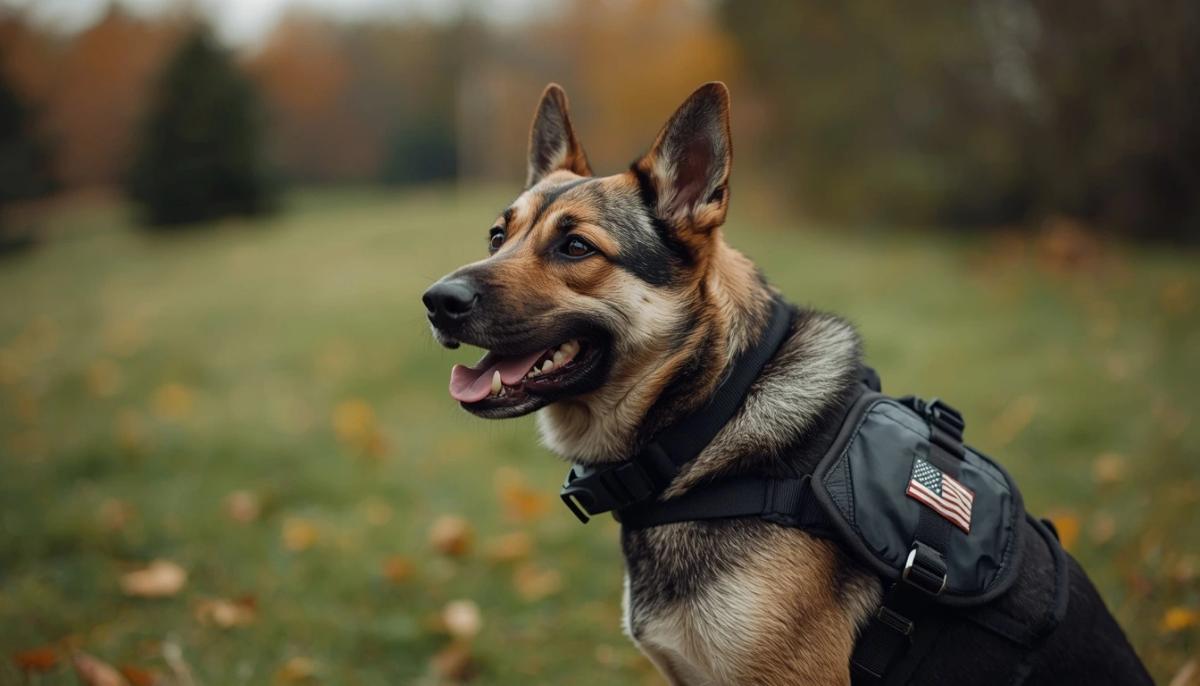
Table Of Contents
If you’ve ever wondered how to make your dog a service dog, you are not alone. Whether you have a specific disability that requires assistance or you are simply curious about the rigorous journey these incredible animals go through, understanding the process is essential. Service dogs are not just pets; they are highly trained lifelines for individuals with disabilities, providing independence, safety, and comfort.
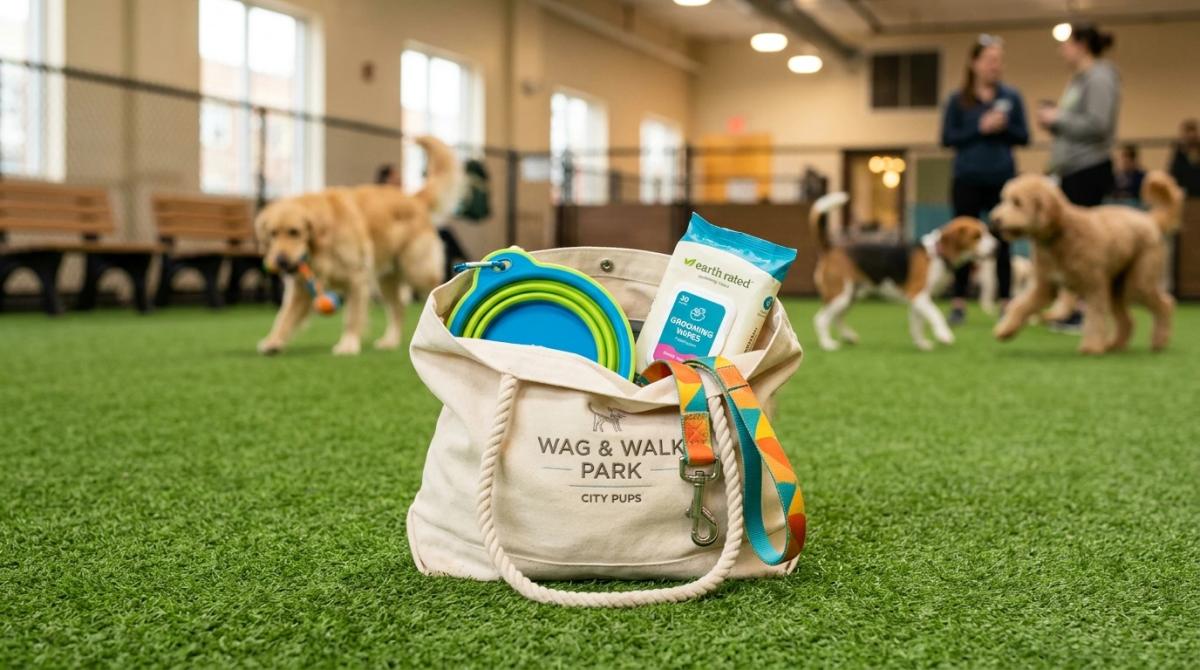
In this article, we will break down exactly what it takes to turn a dog into a service dog. We’ll cover everything from the legal definitions under the Americans with Disabilities Act (ADA) to the specific training hours required. Plus, we’ll explore how controlled environments—like your local indoor dog park can play a crucial role in their socialization.
If you want to learn more about our mission to support all dogs and their owners, feel free to check out our About Us page.
What is a Service Dog?
Before diving into the "how-to," it is critical to understand what a service dog actually is. According to the Americans with Disabilities Act (ADA), a service animal is defined as a dog that has been individually trained to do work or perform tasks for an individual with a disability. The task(s) performed by the dog must be directly related to the person's disability.
This is a legal distinction that separates service dogs from other types of working dogs or pets. The law protects the rights of individuals with disabilities to bring their service dogs into public places where animals are typically not allowed, including restaurants, stores, and hospitals.
Service Dog vs. Emotional Support Animal (ESA) vs. Therapy Dog
One of the most common points of confusion is the difference between a Service Dog, an Emotional Support Animal (ESA), and a Therapy Dog. Understanding these differences is vital to ensure you are following the law and respecting the vital roles these dogs play.
Below is a detailed breakdown of the differences:
| Feature | Service Dog | Emotional Support Animal (ESA) | Therapy Dog |
|---|---|---|---|
| Legal Protection (US) | ADA (Americans with Disabilities Act) | Fair Housing Act (FHA) | None (relies on facility permission) |
| Public Access Rights | Yes, full public access (restaurants, stores) | No public access rights; housing only | Only in participating facilities (hospitals, schools) |
| Training Required | Extensive, specialized task training | Basic obedience (no specialized training required) | Basic obedience & calm demeanor certification |
| Primary Role | Perform specific tasks for a disabled handler | Provide comfort through their presence | Provide comfort to people other than the handler |
Data sourced from the official ADA guidelines on service animals.
5 Essential Traits of a Good Service Dog Candidate
Not every dog is cut out for service work. In fact, professional organizations often see a high "washout" rate because the job is so demanding. If you are evaluating a dog for service work, here are five essential traits they must possess:
- Calm Demeanor: The dog must not be easily startled by loud noises, crowds, or sudden movements.
- Eagerness to Please: A strong desire to work with their handler is crucial for the rigorous training process.
- High Intelligence: The dog must be capable of learning complex tasks and retaining that information.
- Friendly but Focused: While they shouldn't be aggressive, a service dog must be able to ignore other people and dogs while working.
- Physical Soundness: The dog must be physically capable of performing the required tasks (e.g., retrieving dropped items, guiding, or providing physical support) and have a clean bill of health from a veterinarian.
If you have questions about whether your dog's temperament is suitable, it's highly recommended to consult with a professional trainer. Need to get in touch with our community? Visit our Contact page.
How to Train Your Dog to Be a Service Dog: Step-by-Step
Training a service dog is a marathon, not a sprint. It takes dedication, consistency, and a lot of patience. Here is a breakdown of the typical training phases.
Phase 1: Foundation and Socialization
Before a dog can learn complex tasks, they must be a model canine citizen. This phase begins when they are a puppy (or immediately for an older dog). It involves mastering basic obedience commands like sit, stay, down, come, and heel.
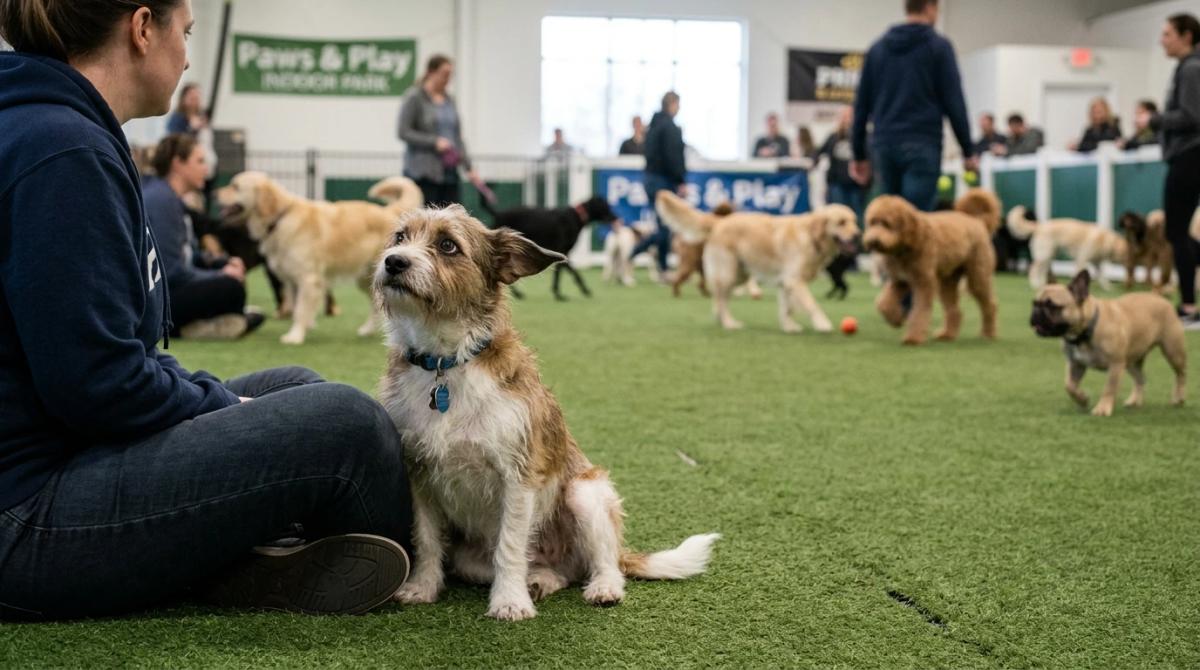
Socialization is arguably the most critical part of this phase. The dog must be exposed to various environments, surfaces, sounds, and people without showing fear or aggression. Pro Tip: Utilizing local, controlled environments like an indoor dog park can be an excellent way to safely socialize your dog around varying stimuli and other animals while keeping them out of extreme weather.
Phase 2: Public Access Training
A service dog must behave impeccably in public. This means no barking, no pulling on the leash, no sniffing merchandise in stores, and no soliciting attention from strangers.
During public access training, you will slowly introduce the dog to dog-friendly public spaces before moving on to non-dog-friendly spaces (once they are fully performing their tasks and legally qualify as a service dog). The dog must learn to tuck themselves under tables at restaurants and remain unobtrusive in tight spaces.
🌧️ Extreme Weather Dog Safety & Indoor Play Guide
Don't let scorching summer pavement or freezing winter storms compromise your dog's physical health and mental happiness. Get our comprehensive survival guide delivered instantly.
Phase 3: Specialized Task Training
This is what officially makes your dog a service dog under the ADA. The dog must be trained to perform a specific action that mitigates your disability. Examples of tasks include:
- Alerting a diabetic handler to dangerous blood sugar levels.
- Providing deep pressure therapy (DPT) during a psychiatric episode or panic attack.
- Guiding a handler who is blind or visually impaired.
- Retrieving dropped items or opening doors for a handler with mobility issues.
- Alerting a deaf handler to specific sounds like alarms or doorbells.
How Many Training Hours Are Required?
When people ask how to make a dog a service dog, they often want to know exactly how long it takes. While the ADA does not specify a minimum number of training hours, international standards provide a solid benchmark.
Assistance Dogs International (ADI), a leading authority in the field, sets the following standards for service dog training:
- Minimum of 120 hours of training over a period of at least six months.
- Minimum of 30 hours of that training must be dedicated to public access skills in a wide variety of environments.
This means you should expect to spend at least an hour a day, every day, for six months just to meet the bare minimum standards. Realistically, most owner-trainers spend 1 to 2 years fully preparing their service dog for public life.
Do You Need to Register Your Service Dog?
This is one of the biggest myths surrounding service dogs in the United States. Under the ADA, there is NO mandatory registration, certification, or ID card required for a service dog.
Many websites sell "official" service dog vests, certificates, and ID badges. While a vest can be helpful to signal to the public that your dog is working and shouldn't be petted, buying a certificate online does not legally make your dog a service dog. The only thing that legally makes your dog a service dog is if you have a disability and the dog is trained to perform a task to assist you with that disability.
If a business owner questions whether your dog is a service dog, the ADA stipulates they are only legally allowed to ask two questions:
- Is the dog a service animal required because of a disability?
- What work or task has the dog been trained to perform?
They cannot ask for documentation, require the dog to demonstrate the task, or ask about the nature of your disability.
The Role of Professional Help and Local Resources
While owner-training is completely legal and a viable path for many, it is incredibly challenging. Many handlers choose to work with a professional dog trainer who specializes in service dog training, or they obtain a fully trained dog from an established organization. Organizations like the American Kennel Club (AKC) provide excellent resources for finding reputable trainers and understanding the Canine Good Citizen (CGC) test, which is a great baseline for service dog candidates.
Utilizing Your Local Indoor Dog Park for Training
When searching for "service dog training near me," consider how local facilities can aid your journey. Training a service dog requires exposure to other dogs in a controlled, safe environment. An indoor dog park is a fantastic resource for this. It allows your dog to practice remaining focused on you (the handler) amidst the heavy distractions of playing dogs, new smells, and lots of activity. Practicing the "Leave It" and "Focus" commands in the lobby or designated training areas of an indoor dog park can drastically improve your dog's public access reliability.
Explore our indoor dog park directory to find a safe, climate-controlled environment near you to practice these vital socialization and distraction-proofing skills.
Final Thoughts: A Lifelong Commitment
Making your dog a service dog is not a casual undertaking; it is a major lifestyle change and a lifelong commitment to training and reinforcement. The bond you build with a service dog is unparalleled, forged through thousands of hours of teamwork and mutual reliance.
By understanding the ADA laws, committing to the necessary training hours, and utilizing local resources for socialization, you can set yourself and your canine partner up for a successful, life-changing partnership.
Disclaimer: This article is for informational purposes only and does not constitute legal advice. Always refer to the ADA.gov website for the most current legal requirements regarding service animals in the United States.