How to Tell if Your Dog is Overwhelmed at the Dog Park (Signs of Canine Stress)

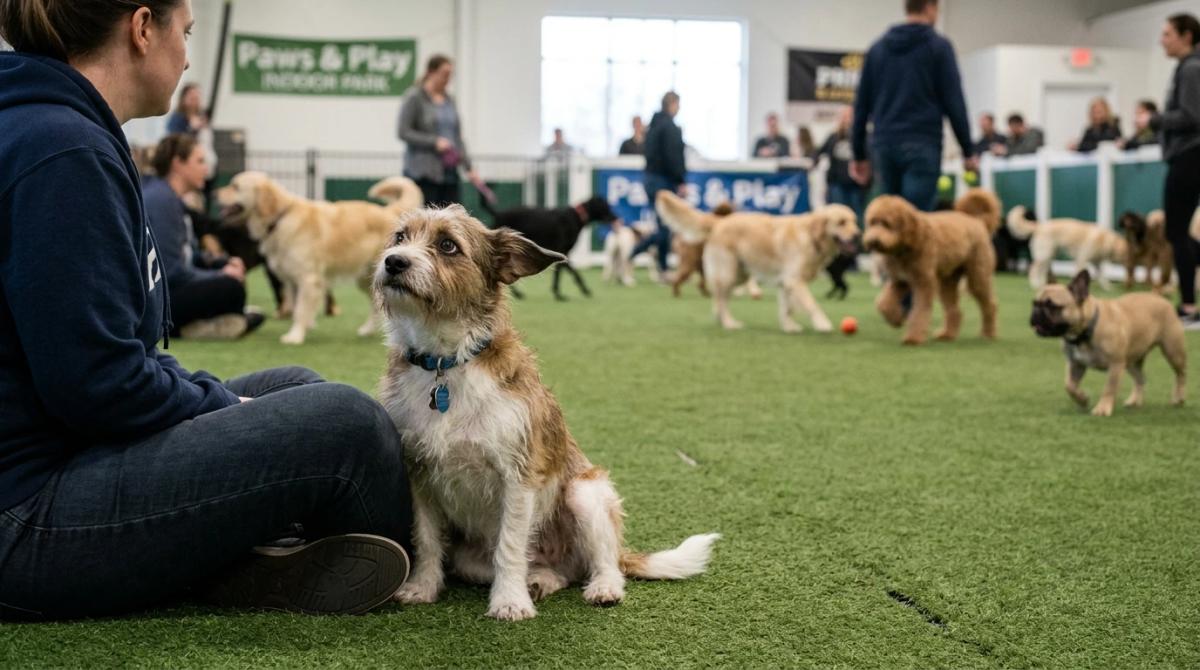
Table Of Contents
As dog owners, taking our furry best friends to an indoor dog park feels like a massive treat. We envision them sprinting across the turf, wrestling happily with new friends, and burning off that endless energy. But sometimes, what looks like a fun playdate to a human is actually a highly stressful situation for a dog.
Whether you're visiting an expansive indoor dog park in Dallas, Texas or a cozy climate-controlled facility in New York, the sights, smells, and echoing sounds of a pack of strange dogs can quickly overstimulate even the most confident pup.
Understanding canine body language is the most important skill you can develop as a pet parent. By recognizing the subtle signs of canine stress, you can intervene before a situation escalates from slight anxiety to a behavioral incident.
In this article, we will break down exactly how to tell if your dog is overwhelmed at the dog park, backed by veterinary behaviorist data, so you can keep your dog safe, happy, and confident.
📊 The "Play vs. Stress" Canine Behavior Matrix
Before we dive into the specific signs, it's crucial to understand the difference between healthy, reciprocal play and overwhelming stress. Many owners mistake a dog "running away" as a fun game of chase, when in reality, the dog is desperately trying to escape.
| Behavior Trait | ✅ Healthy Play (Green Flag) | 🚨 Overwhelmed/Stressed (Red Flag) |
|---|---|---|
| Body Posture | Loose, wiggly, relaxed curves | Stiff, rigid, low to the ground, tucked tail |
| The "Chase" | Role-reversal (taking turns chasing) | One-sided, relentless pursuit, tucked tail |
| Vocalizations | Play growls, high-pitched barks, sneezing | Low-pitched, sustained growls, yelping, silence |
| Taking Breaks | Frequent pauses to shake off and sniff | Unable to disengage, hyper-focused, or hiding |
1. Subtle Signs of Stress: Displacement Behaviors
When a dog is mildly overwhelmed but not yet in full panic mode, they will exhibit what veterinary behaviorists call displacement behaviors. These are normal behaviors displayed out of context, signaling that the dog feels conflicted or mildly anxious.
According to a 2020 study published in the Journal of Veterinary Behavior, the following three signs are the most common early indicators of acute canine stress:
Excessive Lip Licking and Yawning
If your dog hasn't just eaten or taken a nap, but they are repeatedly flicking their tongue over their nose or yawning widely while another dog approaches, they are stressed. This is their way of trying to self-soothe and signaling to the other dog, "I am not a threat, please give me space."
The "Whale Eye"
"Whale eye" occurs when a dog turns their head slightly away but keeps their eyes fixed on whatever is stressing them, revealing the white part of their eyes (the sclera) in a half-moon shape. If you see whale eye at the dog park, your dog is uncomfortable with the proximity of another dog or human.
The Out-of-Context "Shake Off"
You know how a dog shakes their entire body after getting out of a bath? Dogs do the exact same physical movement after a stressful or intense encounter. It is literally their way of "shaking off" the adrenaline and tension. While an occasional shake-off is a great sign that your dog is regulating their emotions during play, continuous shake-offs mean the environment is too stimulating.
(Looking for more baseline dog park rules? Check out our guide on 10 Things Every Owner Must Know Before Visiting the Dog Park.)
2. Moderate to Severe Stress: Behavioral Shifts
If the early displacement behaviors are ignored, an overwhelmed dog will escalate their communication. This is where the risk of a dog park altercation increases.
Hiding Behind Your Legs
Your dog views you as their safe haven. If they are constantly running back to you, sitting on your feet, or trying to hide behind your calves while other dogs are playing, do not force them back into the mix. They are explicitly telling you they are overwhelmed and need you to advocate for them.
Pinned Ears and Tucked Tails
A dog’s ears and tail are the most visible barometers of their emotional state. While breed variations exist (a Greyhound's tail sits lower than a Husky's), a sudden change to tightly pinned back ears and a tail tucked firmly between the hind legs is a universal sign of fear and submission.
Snapping vs. Correcting
It is normal for dogs to correct each other. A quick, noisy air-snap accompanied by a turn away is a healthy, normal dog boundary saying, "That's enough." However, if a dog is overwhelmed, these corrections will become frantic, repetitive, and lack the "turn away" de-escalation. If your dog is continuously having to correct other dogs, the environment is too stressful for them to handle.
🌧️ Extreme Weather Dog Safety & Indoor Play Guide
Don't let scorching summer pavement or freezing winter storms compromise your dog's physical health and mental happiness. Get our comprehensive survival guide delivered instantly.
3. How Indoor Environments Affect Canine Stress
Indoor dog parks are incredible resources, especially during freezing winters in Chicago or sweltering summers in Texas. However, the unique indoor environment can sometimes exacerbate stress for sensitive dogs.
Acoustic Stress (Noise Levels): Unlike outdoor fields where sound dissipates into the wind, indoor facilities—even those with acoustic paneling—trap sound. The echoing of barking can raise cortisol (the stress hormone) in sensitive dogs much faster than an outdoor environment.
Enclosed Spaces: Indoor parks have physical walls. For a fearful dog, this can trigger a "feeling trapped" response faster than an open field. This is why many owners debate between traditional parks and structured doggy daycares where group sizes are carefully managed.
4. The "Yellow Dog Project" (Advocating for Your Dog)
If you know your dog is easily overwhelmed, fearful, or currently in training, you don't necessarily have to avoid public spaces forever.
Consider utilizing the Yellow Dog Project standards. Equipping your dog with a highly visible yellow collar or leash is a universal sign to other educated dog owners that your dog requires space and should not be approached by off-leash dogs.
For a deep dive into this incredibly useful tool, read our complete guide: The Everyday Yellow Nylon Dog Collar: Durability, Safety, and Hidden Meanings.
5. What to Do When Your Dog is Overwhelmed (The Action Plan)
If you spot the signs of stress in your dog, you must act quickly as their advocate. Here is the step-by-step action plan to de-escalate the situation safely.
The 3-Second "Consent Test"
If you aren't sure if your dog is having fun or being bullied during a wrestling match, use the 3-second rule. Gently separate the two dogs and hold the instigator (the dog doing the chasing or pinning) back. Count to three.
- If your dog happily bounds back over to the other dog to restart the play, it was consensual fun.
- If your dog takes the opportunity to walk away, shake off, or come to you, they were overwhelmed and wanted out.
Step Into the "Chill Zone"
Most premium indoor dog parks have separate areas for small dogs, or designated "chill zones" where rowdy play is discouraged. If your dog is showing signs of lip licking or whale eye, confidently leash them up and walk them to a quiet corner. Give them 5 to 10 minutes to let their adrenaline drop.
Know When to Leave (Without Guilt)
Sometimes, the energy of the park is simply a bad match for your dog on that specific day. There is no shame in leaving after 10 minutes. Forcing a stressed dog to "tough it out" will only create negative associations, making them even more fearful the next time you visit. It is always better to leave on a neutral note than to wait for a negative incident.
🐶 Frequently Asked Questions (FAQ)
Q: Is it normal for my dog to be overwhelmed on their first visit to an indoor dog park? A: Absolutely! The smells of hundreds of previous dogs, combined with the echoing acoustics of an indoor facility, is a sensory overload. Keep the first visit short (15-20 minutes) and praise them heavily to build positive associations.
Q: My dog was playing fine, but suddenly got snappy. What happened? A: This is called "trigger stacking." Small stressors (a loud noise, a dog jumping on them, getting thirsty) stack up until the dog hits their threshold. Once that threshold is crossed, they react by snapping. This is why watching for early displacement behaviors is crucial.
Q: Should I pick up my small dog if a big dog overwhelms them? A: While your instinct is to swoop them up, picking up a small dog can actually trigger a high-prey-drive reaction in the larger dog, causing them to jump on you. Instead, step in front of your small dog to body-block the approaching dog, firmly say "No," and ask the other owner to recall their pet.
Conclusion: Be Your Dog's Advocate
The dog park should be an enriching, joyful experience for your furry family member. By actively watching for the early warning signs of canine stress—like lip licking, pinned ears, and frantic hiding you can ensure that your dog always feels safe and protected.
Remember, you are your dog's voice. Don't be afraid to step in, use the 3-second consent test, or simply call it a day and head home early. A happy, confident dog is built on a foundation of trust, and recognizing when they are overwhelmed is the ultimate way to strengthen that bond.