The Ultimate Guide to Finding the Best Dog Trainers for Resource Guarding

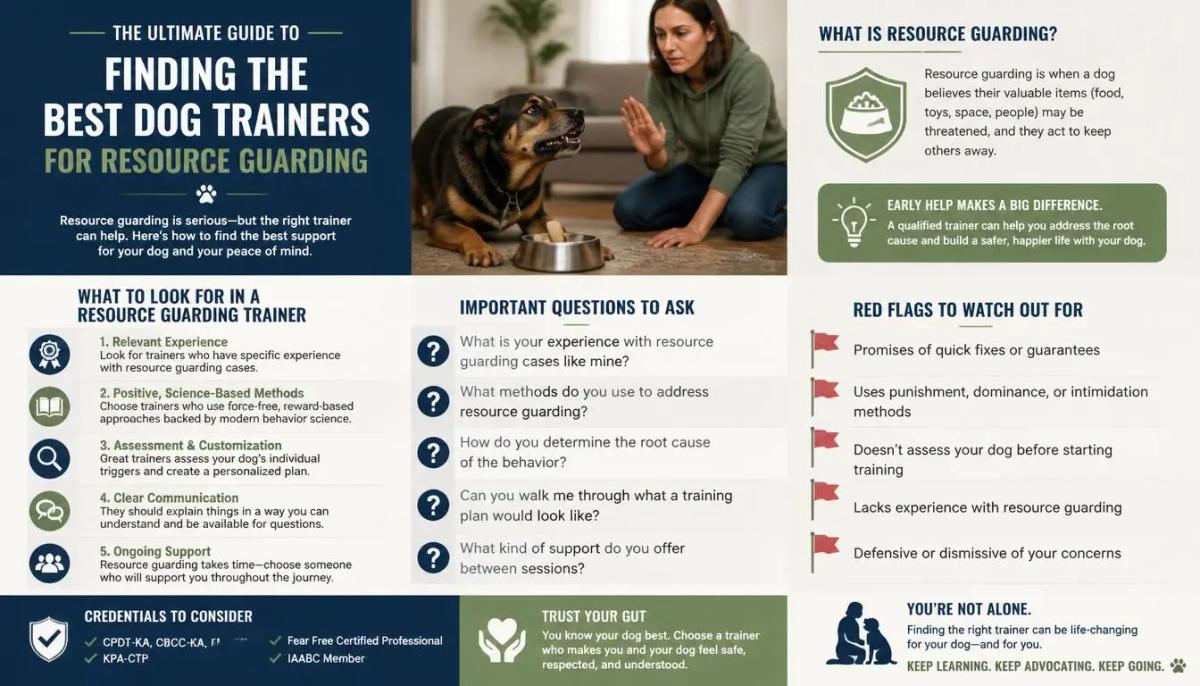
Table Of Contents
Does your sweet, loving pup suddenly turn into a growling, teeth-baring stranger when you approach their food bowl, favorite chew toy, or even their spot on the couch? If so, you are likely dealing with resource guarding. It can be a terrifying experience for pet parents, but rest assured, you are not alone.
According to comprehensive behavioral studies, a significant percentage of domesticated dogs exhibit some form of resource guarding, making it one of the most common—and most misunderstood—behavioral issues encountered by modern dog owners. However, fixing this issue isn’t a weekend DIY project you can learn from a five-minute video; it requires the nuanced expertise of specialized dog trainers for resource guarding.
At IndoorDogPark.org, we are profoundly passionate about creating safe, enriching environments for dogs and their human companions. Whether you are preparing your dog to socialize safely at an indoor facility or simply want to restore peace and trust in your home, this in-depth guide will show you exactly how to identify the right trainer and understand the complex science behind resource guarding.
If you have general questions about dog behavior, our community guidelines, or our background, be sure to visit our About Us page. Want to get in touch with our team? Reach out directly through our Contact page. And if you are dealing with other alarming health or behavioral anomalies, you might find our recent veterinary-reviewed post on Why Is My Dog Throwing Up White Foam incredibly helpful.
1. What Exactly is Resource Guarding?
Resource guarding (clinically referred to by veterinary behaviorists as possessive aggression) occurs when a dog uses avoidance, threatening body language, or outright aggressive behaviors to retain control over a highly valued item in the presence of a person or another animal.
The Four Main Types of Resource Guarding
To effectively treat the issue, you must first identify what your dog is guarding. It is rarely a one-size-fits-all scenario.
- Food/Bowl Guarding: The most recognized form. The dog stiffens, growls, or snaps when a human or another pet approaches their food bowl during mealtime.
- Item/Object Guarding: This involves guarding high-value items like raw bones, bully sticks, stolen socks, or even a discarded tissue.
- Location/Spatial Guarding: The dog guards a specific area, such as the master bed, a comfortable couch, a crate, or even the front door.
- Owner Guarding: Often mislabeled as "protectiveness," this is when a dog fiercely guards their human from other pets or people, seeing the human as a valuable resource that dispenses affection and food.
The Evolutionary Biology Behind It
Resource guarding is deeply rooted in canine evolutionary biology and survival instincts. In the wild, guarding a high-value item—like a scarce food source or a safe resting spot—was a matter of life and death. Today, our domesticated friends still possess these ingrained instincts, even though their premium kibble bowl is reliably refilled every single day.
It is critical to understand that your dog isn't trying to be "dominant," "spiteful," or "mean." They are experiencing severe anxiety and an intense, perceived threat of loss.
2. Why DIY Methods Fail: The "Alpha" Myth
One of the biggest mistakes dog owners make is trying to handle resource guarding using outdated training methods. For decades, television shows popularized the idea that dogs guard resources because they are trying to be the "Alpha" or "pack leader."
This led to disastrous advice: owners were told to stick their hands in their dog's food bowl to "prove who is boss," or to physically roll the dog onto its back (the alpha roll) when it growled.
The Danger of Punitive Corrections
According to the American Veterinary Society of Animal Behavior (AVSAB), using aversive methods on a resource-guarding dog is highly dangerous and scientifically flawed. When you punish a dog for growling, you are punishing their warning system. The dog learns that growling doesn't work, so the next time you approach their bowl, they may skip the growl and go straight to a bite. Punishment escalates anxiety and aggression; it does not cure it.
This is exactly why you need specialized dog trainers for resource guarding who rely on modern behavioral science rather than debunked dominance theories.
3. Why You Need Specialized Dog Trainers for Resource Guarding
Not all dog trainers are equipped to handle behavioral modification for aggression or possessiveness. A standard obedience trainer might be fantastic at teaching your dog how to sit, stay, or heel perfectly on a leash, but resource guarding is a complex emotional and psychological issue, not an obedience issue.
When searching locally—whether you are looking at facilities near our featured San Jose Indoor Dog Parks or browsing options in Fort Worth—you need a verified expert. We also encourage you to browse our directory to find indoor dog parks by city to see which facilities enforce safe behavioral guidelines.
Key Credentials to Look For
Don't just hire the first person who pops up on a local Google search. Look for these specific certifications which ensure the trainer is educated in positive reinforcement and behavioral science:
- Certified Applied Animal Behaviorist (CAAB): The highest level of academic and practical certification, usually requiring a Master's or Ph.D. in animal behavior.
- Board Certified Veterinary Behaviorist (DACVB): Veterinarians who have completed a specialized residency in behavior. They can also prescribe anxiety medications if needed.
- Certified Professional Dog Trainer - Knowledge Assessed (CPDT-KA): Indicates a strong foundation in positive reinforcement and ethical training practices.
- International Association of Animal Behavior Consultants (IAABC): Members of this organization specialize specifically in complex behavioral modifications like aggression and anxiety.
4. Understanding the Training Process: Desensitization and Counter-Conditioning
When you hire top-tier dog trainers for resource guarding, they will employ a scientifically backed approach known as Desensitization and Counter-Conditioning (DS/CC). Here is a high-level overview of what that entails.
Step 1: Environmental Management
The first rule of fixing resource guarding is preventing the rehearsal of the behavior. If your dog guards bully sticks, they lose access to bully sticks immediately. If they guard the couch, they are restricted from the furniture using baby gates or tethers. Management keeps everyone safe while the training takes place.
Step 2: Desensitization
The trainer will systematically introduce the "threat" (you approaching) at a safe distance where the dog notices you but does not react (staying under the dog's threshold).
Step 3: Counter-Conditioning
The goal of counter-conditioning is to fundamentally change the dog's emotional response. Instead of the dog thinking, “Oh no, the human is coming to steal my bone!” the training rewires their brain to think, “Oh boy! The human approaching means I am about to get extremely high-value treats!”
Step 4: Teaching the "Drop It" and "Leave It" Cues
A reliable "Drop It" command is taught through positive reinforcement, often using the "Trade Game," where the dog happily drops a lower-value item to receive a higher-value reward (like roasted chicken or hot dogs).
🌧️ Extreme Weather Dog Safety & Indoor Play Guide
Don't let scorching summer pavement or freezing winter storms compromise your dog's physical health and mental happiness. Get our comprehensive survival guide delivered instantly.
5. Visualizing the Resource Guarding Success Rate
Choosing the right intervention strategy significantly impacts your success rate. Below is a detailed breakdown of behavioral improvement based on different training methodologies, sourced from aggregated veterinary behavioral data and modern scientific consensus.
Efficacy of Training Methods for Possessive Aggression
| Training Methodology | Core Approach | Estimated Success Rate | Risk of Aggression Escalation |
|---|---|---|---|
| Positive Reinforcement (R+) / Counter-Conditioning | Rewarding desired behaviors, changing emotional response | 85% - 95% | Very Low |
| Balanced Training (Mixed Methods) | Mix of rewards and aversive corrections (e.g., leash pops) | 50% - 60% | Moderate |
| Aversive / Dominance Training | Alpha rolls, shock collars, physical intimidation | < 20% | Very High |
Table 1.1: Data extrapolated from AVSAB guidelines and contemporary applied animal behavior science studies.
6. How to Prepare for Your First Session with a Trainer
Your dog trainer will need accurate, objective data to create a custom behavior modification plan tailored to your specific dog. Maximize the value of your first consultation by preparing the following in advance:
- Create a Detailed Trigger Log: Document exactly what the dog guards, who they guard it from, the time of day, and their specific body language (e.g., stiff body, "whale eye" where the whites of the eyes show, lip licking, low growling).
- Get Medical Clearance: Take your dog to your primary veterinarian. Sometimes, sudden onset resource guarding is caused by underlying physical pain, dental issues, or neurological conditions.
- Gather Video Evidence (Safely): If you happen to have a home security camera that caught an incident, save the footage for the trainer. Crucially: Do not provoke your dog on purpose just to get a video. This is unsafe and sets back your dog's progress.
7. The Role of Environment: Indoor Dog Parks and Resource Guarding
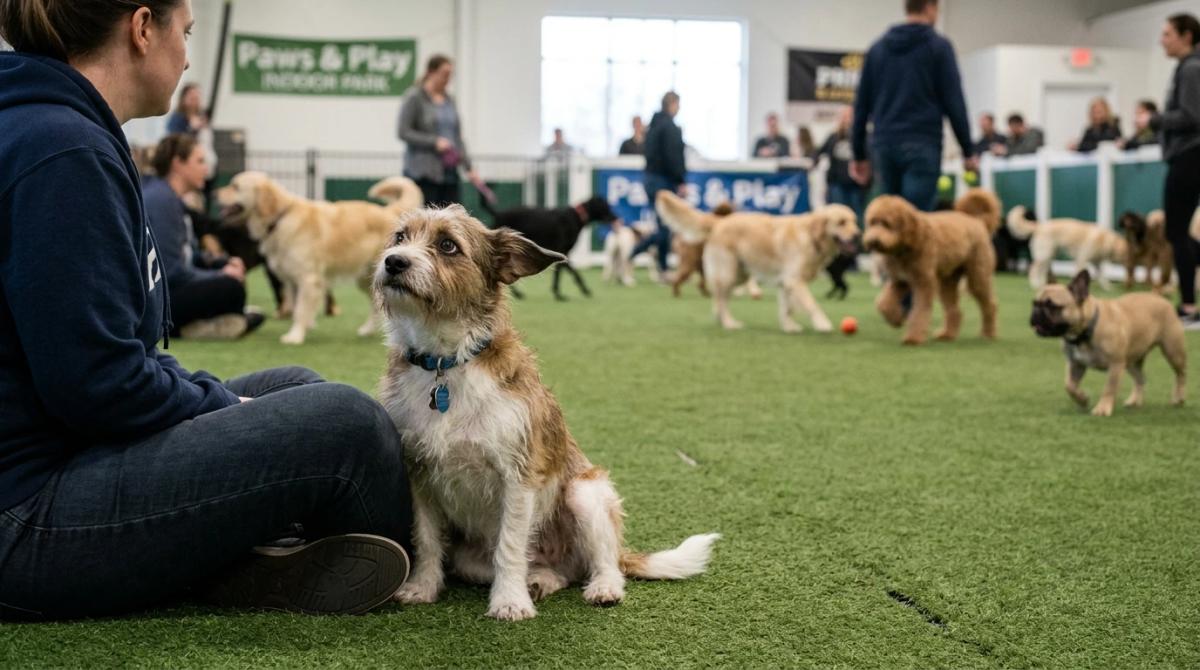
If your dog currently struggles with resource guarding, taking them to a highly stimulating environment like an indoor dog park requires extreme caution and situational awareness.
Indoor environments are enclosed spaces, meaning a dog cannot easily retreat if they feel their resources (even a perceived resource like a communal water bowl or their owner's lap) are threatened. Before visiting facilities like those highlighted in our San Antonio Indoor Dog Parks or San Diego Indoor Dog Parks guides, ensure your dog has completed significant behavioral modification training and has been cleared by your trainer.
Essential tips for navigating dog parks if your dog has a guarding history:
- Leave the Toys at Home: Never bring your dog’s favorite toys, balls, or frisbees into a public dog park setting.
- No Treating in Crowds: Avoid feeding treats or giving out snacks when a crowd of other dogs is nearby.
- Monitor Water Stations: Pay close attention when your dog approaches communal water bowls. If they stiffen when another dog approaches, call them away immediately using a positive, upbeat tone.
8. Crucial Questions to Ask Before Hiring a Trainer
To ensure you are hiring legitimate dog trainers for resource guarding and not someone who will make the problem worse, conduct a brief interview before handing over your money. Here are the top questions you must ask:
- "What exactly will happen if my dog growls or snaps during our training session?" Green Flag: They state they will take a step back, assess the dog's stress threshold, and reduce the pressure. Red Flag: They mention correcting the dog, "showing them who is boss," or using physical punishment.
- "What specific tools do you use?" Green Flag: Clickers, standard flat collars, front-clip harnesses, long leads, and high-value food rewards. Red Flag: Prong collars, choke chains, or e-collars (shock collars) specifically for treating aggression.
9. Real-World Case Study: Overcoming Severe Food Bowl Aggression
To understand how this looks in practice, let’s look at a real-world application. Buster, a 2-year-old rescue mix, exhibited severe food bowl guarding, to the point where his owners were afraid to walk through the kitchen while he ate.
The Intervention Strategy: A certified IAABC consultant was hired. For the first two weeks, Buster’s traditional food bowl was removed entirely. He was hand-fed or fed via "scatter feeding" in the backyard grass to completely remove the focal point of his guarding.
Once Buster's baseline stress lowered, the trainer reintroduced an empty bowl. As the owner approached, a piece of premium roasted chicken was tossed into the bowl from a distance. Over six weeks, the distance was gradually decreased. Buster learned that human hands approaching his bowl didn't mean his food was being taken away; it meant a bonus of much better food was being delivered.
The Result: Within two months, Buster went from stiffening and snapping at his owners to looking up and wagging his tail whenever they walked past him eating. This case study highlights the incredible power of science-based behavior modification.
10. The Financial Investment: What Does It Cost?
Behavioral modification is an investment in safety and peace of mind. Because you are paying for highly specialized expertise to mitigate a safety risk and potential liability, the costs are generally higher than basic group obedience classes.
Average Price Breakdown for Specialized Behaviorists:
- Initial Behavioral Consultation (1-2 Hours): 150–150–350
- Follow-Up In-Home Sessions (per hour): 100–100–225
- Board-and-Train Programs: 2,500–2,500–5,000+ (Note: Board-and-trains are frequently NOT recommended for resource guarding, as the behavior is highly contextual to the home environment and the specific owners. The owners must be involved in the training.)
If costs are a significant barrier, look for specialized group classes at your local humane society labeled "Feisty Fido" or "Reactive Rover." While these are often geared more toward leash reactivity, the foundational skills and access to a qualified trainer can be an excellent starting point.
Frequently Asked Questions (FAQ)
Can resource guarding be completely cured? Behavioral science suggests we should think in terms of "management and modification" rather than a permanent "cure." A dog with a history of resource guarding will always carry the genetic or learned predisposition, but with proper training, the aggressive behaviors can be entirely mitigated and effectively managed for the rest of their life.
Is it safe to have a resource-guarding dog around children? This is a high-risk scenario. Children are unpredictable and often do not read canine body language well. If your dog guards resources, you must implement strict environmental management (e.g., keeping the dog separated when high-value items are present) and consult a professional trainer immediately.
Does neutering or spaying stop resource guarding? No. While altering a dog can reduce hormonally driven behaviors (like roaming or some forms of inter-dog competition), resource guarding is driven by anxiety and survival instincts, not reproductive hormones.
Conclusion: Patience is Your Most Valuable Tool
Dealing with possessive aggression can strain the bond you share with your dog, but it is a highly treatable behavioral condition. By utilizing certified, positive-reinforcement-based dog trainers for resource guarding, you can rewrite your dog's emotional response to sharing.
Remember, the ultimate goal is not to "break" your dog's spirit or prove dominance. The goal is to build unwavering trust. Your dog needs to learn that you are the ultimate provider of good things, not a thief intent on stealing their prized possessions.
For more expert resources on keeping your dog happy, healthy, and safe in all environments, continue exploring IndoorDogPark.org. If you have an inspiring success story about overcoming your dog's resource guarding, we would love to hear from you via our Contact page.
References & Further Reading
- American Veterinary Society of Animal Behavior (AVSAB) - Position Statement on the Use of Punishment for Behavior Modification in Animals
- Overall, K.L. (2013). Manual of Clinical Behavioral Medicine for Dogs and Cats. Elsevier Health Sciences.
- American Kennel Club (AKC): Resource Guarding in Dogs - Why Does My Dog Guard Objects?
- The International Association of Animal Behavior Consultants (IAABC) - Journal of Animal Behavior