Rainy Day Dog Activities: Why Indoor Dog Parks Beat Staying at Home

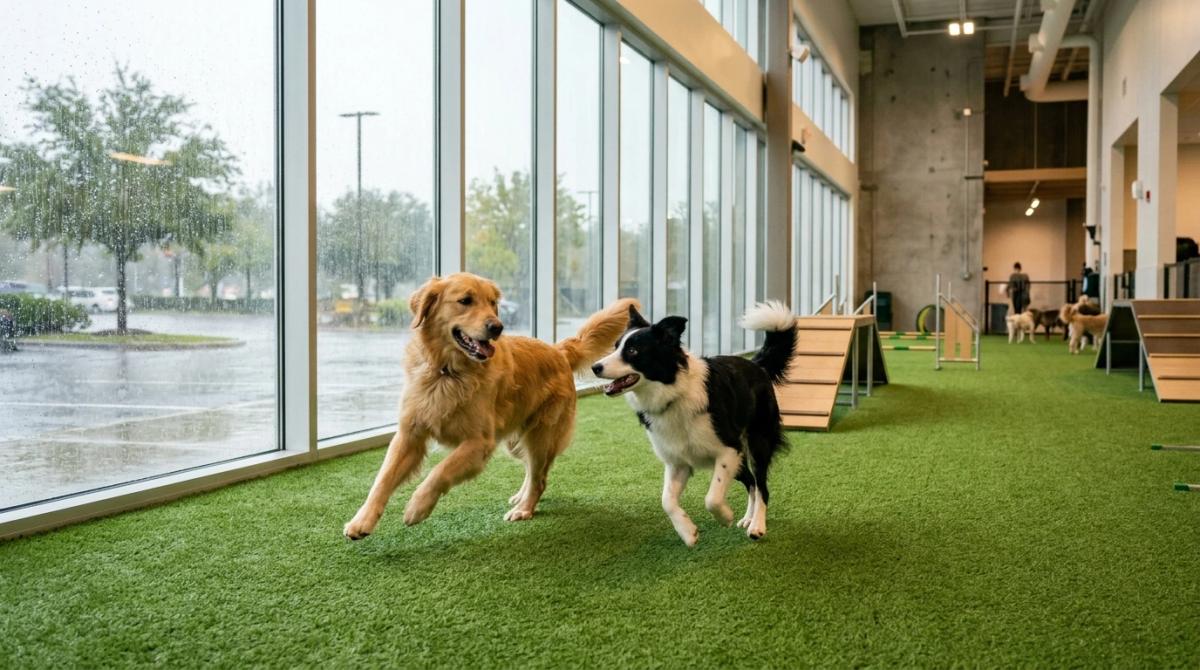
Table Of Contents
Anyone who shares a home with an active dog knows the exact feeling of looking out the window on a Tuesday morning, seeing a downpour of rain, and watching their dog stare back with an expectant, energetic gaze.
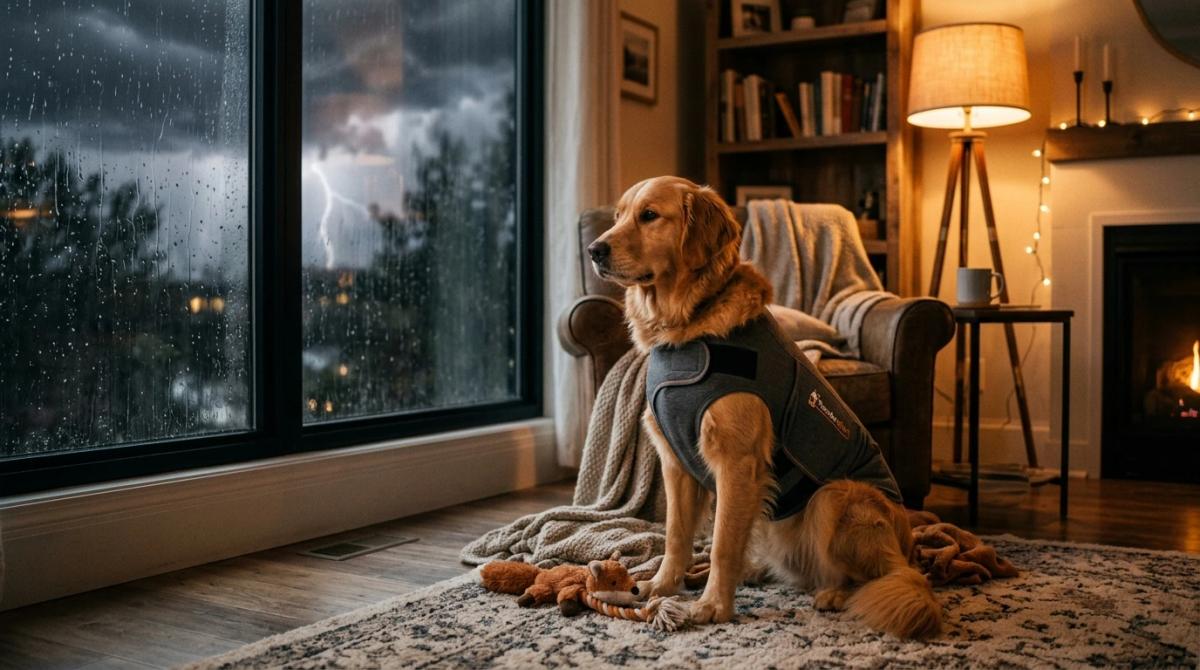
When the weather turns foul, daily routines crumble. The long morning walk turns into a hasty five-minute bathroom break, and your living room suddenly becomes the stage for frantic pacing, barrier frustration, and relentless indoor zoomies around the coffee table. For pet parents dealing with thunder-sensitive pups, this cabin fever often collides with severe stress—a challenge we break down in our guide on managing storm anxiety in dogs.
Before deciding whether to brave the elements, you can check your local temperature and precipitation risk with our Weather Safety Calculator. But when conditions are genuinely miserable, owners need a sustainable plan. While at-home puzzles and brain games have their place, they only solve half the equation. Over time, many owners reach a turning point where indoor fetch down a narrow hallway simply stops working.
Indoor dog parks have completely transformed how we manage inclement weather. These purpose-built facilities are more than a luxury—they are a practical, high-value solution for physical conditioning, behavioral stability, and owner sanity. In fact, as explored in our deep-dive on the future of indoor zoomies and canine play, climate-controlled facilities are rapidly redefining how modern urban dogs fulfill their evolutionary drive to run.
The Go-To At-Home Rainy Day Activities (And Their Natural Limits)
When you are trapped indoors, the default instinct is to get creative within the four walls of your house. To keep cabin fever at bay, most experienced dog owners lean on a familiar rotation of mental enrichment exercises:
1. Scent Work and Foraging Games
Hiding treats around the living room, rolling kibble inside a snuffle mat, or creating cardboard box foraging puzzles taps directly into a dog’s olfactory system. A dog's sense of smell is their primary mechanism for processing the environment, and 20 minutes of focused nosework burns substantial mental energy.
2. Puzzle Toys and Lick Mats
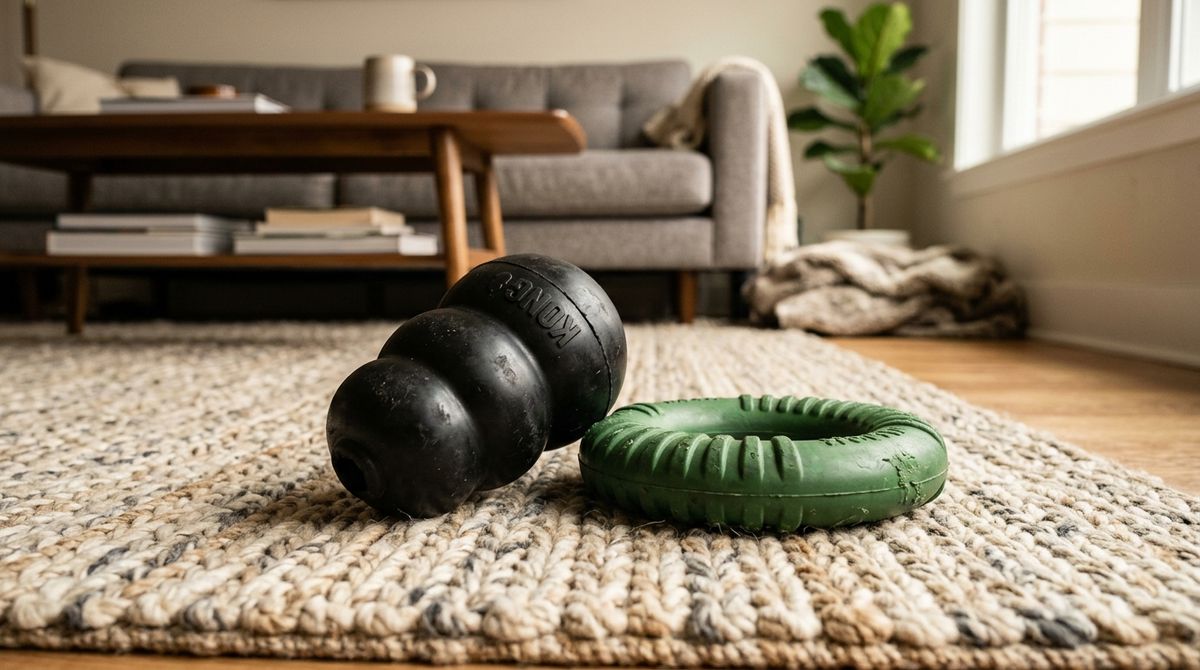
Interactive sliding puzzle boards, stuffed frozen KONGs, and textured lick mats loaded with peanut butter or Greek yogurt encourage prolonged licking and chewing. These repetitive oral actions stimulate the vagus nerve and release calming endorphins, which helps lower baseline arousal in an under-stimulated dog.
3. Indoor Trick Training and Shaping
Using positive reinforcement to shape complex behaviors—such as teaching your dog to weave through your legs, put their toys away into a basket, or hold a steady "place" command challenges executive function and strengthens handler communication. If you are working on foundational manners, structured puppy socialization and obedience training provides an excellent blueprint for home sessions.
4. Hallway Fetch and Tug-of-War
When dogs exhibit an undeniable urge to move, owners frequently clear a path down a hallway or engage in a game of tug to burn off physical steam. You can measure your pup’s baseline physical requirements using our Dog Exercise Calculator to see just how much aerobic exercise they are missing on a rainy day.
The Enrichment Gap: At-Home vs. Indoor Dog Parks
- ✓ Mental Stimulation: High
- ✕ Cardiovascular Sprinting: None
- ✕ Canine-to-Canine Play: None
- ✕ Joint-Safe Flooring: Slick & Risky
- ⚠ Household Hazards: High Collision Risk
- ✓ Mental Stimulation: High
- ✓ Cardiovascular Sprinting: Full-Stride Freedom
- ✓ Canine-to-Canine Play: Natural Pack Dynamics
- ✓ Joint-Safe Flooring: Impact-Absorbing Turf
- ✓ Environment: Supervised, Open Arena
Why Living Rooms Fall Short
In my experience working with high-drive sporting breeds and energetic rescue dogs, there is a hard biological ceiling on what at-home enrichment can accomplish. Mental stimulation tires the brain, but it cannot satisfy a canine's physiological need for full-body cardiovascular exertion.
When a 60-pound dog spends forty-eight hours cooped up inside, physical tension accumulates in their musculoskeletal system. Hallway fetch frequently leads to dangerous slips on slick hardwood, hardwood-to-carpet edge trips, and acute soft-tissue sprains. When sudden slips happen, knowing how to evaluate dog limping and when to see a vet is critical.
At a certain point, mental puzzles cannot replace the biological necessity of an unrestricted dead sprint.
Why Indoor Dog Parks Outperform Staying at Home
Making the transition from a cramped living room to a dedicated indoor facility changes the entire dynamic of rainy-day dog care. These venues are engineered specifically around canine biomechanics, social instincts, and handler peace of mind.
Full Freedom of Movement
Full-stride sprinting, high jumps, and open-field agility without tight corners or slippery floors.
Mud-Free Sanitation
Antimicrobial turf with sub-drainage systems. Zero mud, zero wet dog odor, zero post-walk baths.
Social Complexity
Real canine communication, reciprocal chase, and body-language calibration with other dogs.
Supervised Safety
Vaccination audits, temperament evaluations, and trained staff monitoring every play interaction.
1. Unrestricted Biomechanical Freedom
Dogs are quadrupeds built for galloping, rapid banking, and stretching out their spine and hips. A living room or basement forces unnatural, short-stride deceleration and jarring stops.
Indoor dog parks offer expansive, column-free square footage. What I quickly realized when I first visited an indoor facility on a stormy weekend was the immediate change in my dog’s gait. Being able to hit top speed on high-traction flooring allows dogs to stretch their tendons and work their cardiovascular system in a way no indoor hallway allows. Many top facilities even offer specialized indoor agility courses and climate-controlled indoor dog pools for low-impact joint conditioning.
🌧️ Extreme Weather Dog Safety & Indoor Play Guide
Don't let scorching summer pavement or freezing winter storms compromise your dog's physical health and mental happiness. Get our comprehensive survival guide delivered instantly.
2. Eliminating the "Wet Dog Disaster"
Taking a dog on a rainy outdoor walk almost always means dealing with:
- Saturated coats that hold moisture for hours
- Mud and road grit trapped in paw pads
- Persistent, unpleasant wet-dog odor clinging to furniture
- A lengthy towel-drying or blow-drying battle at the door
At an indoor park, you pull into the parking lot, enter through an enclosed entryway, and step directly into a dry, temperature-regulated arena. Your dog exercises intensely for an hour and returns to your car completely clean and dry—bypassing the bathtub altogether.
3. Multi-Layered Social Dynamics
While human-directed play is enriching, it operates on a different frequency than peer-to-peer canine interaction. When dogs play together, they engage in intricate communication:
- Play bows and subtle invitation signals
- Reciprocal chase games where roles switch fluidly
- Mutual wrestling governed by bite inhibition
- Calibrated postural shifts and tail carriage
Navigating these interactions demands sharp cognitive focus. Before visiting, reviewing our Canine Body Language Guide and learning the 10 things every owner must know at the dog park will help you advocate for your dog's comfort in group play.
4. Professional Supervision and Entry Standards
Unlike unfenced or unmonitored municipal parks, reputable indoor facilities uphold rigorous protocols. If you've ever asked yourself are indoor dog parks safe?, understanding these operational standards offers tremendous peace of mind:
- Mandatory Vaccination Screenings: Proof of Rabies, DHPP, and Bordetella is required prior to entry.
- Temperament Assessments: Staff evaluate play styles to prevent overly reactive or predatory behavior.
- Trained Park Monitors ("Rufferees"): Dedicated handlers supervise the play floor to de-escalate high arousal.
- Dedicated Zones: Most venues feature dedicated small dog play areas so toy breeds aren't overwhelmed by larger dogs.
If you are deciding between different care options during busy workweeks, our comparative guide on Indoor Dog Parks vs. Dog Daycares breaks down how these models differ in supervision and structure.
The Deep Health & Wellness Benefits of Indoor Dog Parks
Visiting an indoor dog park during bad weather is more than just entertainment—it delivers measurable physiological and behavioral health benefits.
Complete Canine Health Impacts
⚡ Physical Wellness
- Joint-Safe Cushioning: Protects ligaments, hocks, and spinal discs.
- Cardiovascular Health: Sustained aerobic conditioning.
- Lean Muscle Tone: Dynamic multi-directional sprints.
- Paw Protection: Safe from freezing mud and toxic street runoff.
🧠 Behavioral Balance
- Lower Arousal Baselines: Neutralizes pent-up cabin fever anxiety.
- Zero Destructive Chewing: Depletes frantic energy productively.
- Reduced Reactivity: Desensitizes barking at windows and doorbells.
- Restorative Deep Sleep: Shifts the nervous system into rest mode.
Orthopedic Safety on Engineered Canine Flooring
Playing on hardwood or vinyl at home exposes dogs to acute hyperextensions, torn CCLs (cranial cruciate ligaments), and spinal trauma.
Commercial indoor dog parks invest heavily in specialized surfaces. As detailed in our comprehensive analysis of the best indoor dog park flooring: turf vs. rubber vs. epoxy, top facilities install antimicrobial K9 artificial turf with shock-absorbing foam underlayment. This provides:
- Dynamic Traction: Allows sudden pivots and sprints without paw slippage.
- Impact Dissipation: Dampens landing shock on carpal joints, elbows, and hips.
- Hygienic Drainage: Advanced drainage grids flush fluids continuously, ensuring a clean play field.
Regulation of Chronic Stress and Arousal Baselines
When energetic dogs are denied physical outlets for several consecutive days, cortisol and adrenaline accumulate. This biological surplus triggers undesirable coping behaviors:
- Repetitive alert-barking at windows and doorbells
- Destructive chewing on furniture and trim
- Hyper-arousal, jumping, and mouthing
- Heightened reactivity during leash walks
An intense play session resets their central nervous system. When you return home, your dog easily transitions into a parasympathetic state, settling into deep, restorative sleep. For dogs that show possessive tendencies in shared spaces, reviewing our resource on finding trainers for resource guarding ensures you maintain positive play habits.
Protection Against Inclement Weather Pathogens
Outdoor winter and rainy-day walks are not just uncomfortable; they carry genuine medical risks. Freezing moisture and dirty runoff trapped in paw webs can lead to painful dermatitis and yeast overgrowth. For identification tips, read our clinical overview on recognizing dog paw yeast infections and symptoms.
Furthermore, small breeds, short-coated dogs, and seniors with osteoarthritis suffer rapid heat loss in damp weather. Climate-controlled indoor parks maintain steady, warm temperatures where dogs of all ages can exercise without thermal stress or paw trauma.
How to Prepare for Your First Indoor Dog Park Visit
A smooth, positive experience begins with thorough preparation before you load your dog into the car.
To make packing effortless, generate a customized checklist with our Dog Park Packing List Generator or read our complete guide on What to Pack for an Indoor Dog Park. Bringing reliable gear—like one of the best portable dog water bottles and a secure harness evaluated in our Ruffwear harness performance review—makes visits significantly smoother.
You can also test your readiness with our interactive Dog Park Etiquette Quiz and review our official Dog Park Etiquette Checklist to ensure you and your dog are courteous park guests. If an unexpected scrape occurs during play, keep our Canine First Aid Guide handy on your phone.
Conclusion
At-home puzzles, snuffle mats, and trick training are essential tools in every modern pet parent’s repertoire. However, they cannot carry the entire burden of keeping an athletic, socially driven dog healthy through consecutive days of bad weather.
Choosing an indoor dog park bridges the gap between what your dog requires biologically and what the forecast allows. By swapping narrow hallways and wet towels for a clean, climate-controlled, professionally supervised arena, you protect your dog’s joints, satisfy their need for social play, and return home to a relaxed companion.
Ready to explore options near you? Browse our nationwide Indoor Dog Parks Directory, search by Popular Dog-Friendly Cities, or explore your region in our State Directory. Whether you are looking for top-rated spots in Chicago, Seattle, Austin, or Denver, you'll find the perfect indoor haven for your dog's next rainy day.